Kanazawa Samurai Tour
Tours & tickets

Hand-picked by our editors — only the best 5 heritage experiences from 47 reviewed.

Open today 07:00–18:00
Attendance: Moderate — summer season
Arrive early to enjoy the cooler morning temperatures.
Free cancellation Instant confirmation Mobile voucher Verified partner Skip-the-line
Tickets

Choose your ticket

Verified partners for every tour, free cancellation where available, and instant confirmation on every booking.

Shirakawa-go UNESCO Village Morning Tour from Kanazawa 5 hr
Standard Entry

Shirakawa-go UNESCO Village Morning Tour from Kanazawa

4.9 (1574)
€65
per person
Instant Mobile voucher Flexible — change up to 24h

Journey to a UNESCO heritage village of thatched-roof farmhouses and sample regional treats like Hida beef

Reserve
Kanazawa Cultural Highlights Tour 3 hr
Standard Entry

Kanazawa Cultural Highlights Tour

5 (83)
€46
per person
Instant Mobile voucher Flexible — change up to 24h

Explore four historic landmarks in one guided morning: gardens, castle, samurai homes, and geisha streets.

Reserve

Prices from verified partners. Availability updates in real time at checkout. Free cancellation policies apply where shown.

Highlights

What you'll see inside the attraction

The landmarks, rooms, and views travelers on this tour remember — all visible on a single visit.

Ishikawa-mon Gate

A designated Important Cultural Property that served as the rear gate of the castle.

Hishi-yagura Turret

A diamond-shaped tower reconstructed using traditional nail-less carpentry techniques.

Gojikken-nagaya Warehouse

A massive 90-yard-long warehouse structure used for storing weapons and supplies.

Gyokusen-inmaru Garden

A meticulously restored garden featuring a unique tiered landscape and pond.

Hashizume-mon Gate

A significant gate complex that was reconstructed in 2015 to protect the castle entrance.

Head to head

Kanazawa Castle vs Kenrokuen Garden — Which Should You Choose?

Kenrokuen Garden offers a more serene landscape experience, while the kanazawa samurai walking tour provides a deeper dive into the architectural heritage of the castle grounds.

Feature Top pick Kanazawa Castle Kenrokuen Garden
Entrance fee
320 JPY (summer)
Walking intensity
Gentle paths
Duration
1–1.5 hours
Best arrival window
07:00–09:00
Focus
Landscape aesthetics
Heritage status
National site of beauty

Verdict: If you want to view traditional Japanese fortress structures, the kanazawa samurai walking tour tours are ideal, whereas Kenrokuen is superior for those seeking classic garden scenery.

How your ticket works

Book your ticket in 3 steps

  1. 01

    Book online

    Choose your ticket, select your date, and reserve in under two minutes. Secure checkout handled by our verified partner.

  2. 02

    Receive your mobile voucher

    Instant confirmation by email, with a mobile voucher you can save offline. No printing, no queuing at a collection desk.

  3. 03

    Show & enter

    Arrive at the entrance, show your voucher on your phone, and walk in. Most tickets include priority or skip-the-line access.

Plan your visit

Everything you need to know before you go

Practical details for your visit straight from our verified partners — hours, access, rules, and how to get there.

Open today · 07:00–18:00
Opening Hours
07:00–18:00
Address
1-1 Marunouchi, Kanazawa, Ishikawa 920-0937
Access
Wheelchair rentals available at main gates
Best arrival
09:00–11:00
Storage
Coin lockers at Ishikawa-mon Gate
Navigation
Official site: https://shiro-niwa.pref.ishikawa.lg.jp/kanazawa-castle/en/
Mon
07:00–18:00
Tue
07:00–18:00
Wed
07:00–18:00
Thu
07:00–18:00
Fri
07:00–18:00
Sat
07:00–18:00
Sun
07:00–18:00
Location

Address
1-1 Marunouchi, Kanazawa, Ishikawa 920-0937
Storage
Coin lockers at Ishikawa-mon Gate
Navigation
Official site: https://shiro-niwa.pref.ishikawa.lg.jp/kanazawa-castle/en/

Dress code

Casual and comfortable walking attire is recommended for this kanazawa samurai walking tour, as there is significant walking across gravel and stone paths. Footwear suitable for climbing steep interior wooden stairs is advised.

Bags & security

Large luggage should be left in coin lockers near the Ishikawa-mon Gate entrance. Security is low-key, but visitors should avoid carrying items that could damage or deface the historic structures during their kanazawa samurai walking tour.

Photography

Photography is permitted in most areas of Kanazawa Castle, though flash and tripods may be restricted inside specific historic interiors. Capturing the white lead-tiled roofs is a highlight of any kanazawa samurai walking tour.

Accessibility

The main park paths of Kanazawa Castle are largely accessible, though some older sections involve steep slopes. Wheelchairs are available for loan at the main gate areas for those taking a self-guided kanazawa samurai walking tour.

What to bring

  • Comfortable shoes
  • Water bottle
  • Sunscreen
  • Camera
  • Light jacket
  • Small bag

Not allowed

  • Bicycles
  • Motorcycles
  • Alcohol
  • Open flames
  • Drones
  • Sports equipment
  • Spray paint
  • Large banners
  • Fishing gear
  • Pets (except service animals)
  • Hazardous materials

Families & strollers

The park is family-friendly with plenty of open space for children to explore. Note that the steep stairs inside the reconstructed turrets of this kanazawa samurai walking tour may be challenging for small children.

Food & drink

Food and drinks are restricted inside the paid interior structures of the castle. Visitors can enjoy light meals at the rest houses during their kanazawa samurai walking tour.

Around your visit

Everything else worth knowing

Best time to go, insider tips, nearby landmarks, and the cancellation fine print — flip through to skim what matters to you.

Cancellation policy

Flexible, no hidden fees.

Entry to the park grounds is 0 JPY. For paid interior buildings, tickets are typically non-refundable once issued.

About

The place, in context

Kanazawa Castle's outer baileys once housed 1,200 samurai retainers, their residences arranged by rank in strict concentric zones radiating from the Ishikawa Gate. The castle itself rose in 1583 under Maeda Toshiie, daimyo of Kaga Domain and one of the wealthiest feudal lords in Tokugawa Japan. His descendants ruled for fourteen unbroken generations, and the city they built became second only to Edo in cultural output. Unlike most castle towns flattened by war or modernization, Kanazawa's samurai quarters survived largely intact, their earthen walls and wooden gates preserved through a combination of geographic luck and municipal resolve. The district called Nagamachi retains the grid Toshiie laid out in the sixteenth century: narrow lanes surfaced in gravel, high ochre walls capped with ceramic tile, and gated estates whose interiors reveal tatami halls, rock gardens, and weapon alcoves. Today the kanazawa samurai walking tour routes thread through these preserved enclaves, beginning at the castle's Ishikawa Gate and descending into Nagamachi's labyrinth. The Nomura Samurai House, open to visitors since 1978, displays armor, swords, and lacquerware that once belonged to the Nomura clan, mid-ranking retainers who served the Maeda family for two centuries. The estate's interior garden, a compact masterpiece of Edo landscape design, compresses mountain, waterfall, and stone lantern into a space smaller than a tennis court. A few blocks west, the Shinise Kinenkan Museum occupies a former pharmacy and showcases the merchant class that supplied the samurai with silk, tea, and gold leaf. Walking tours typically cover two to three kilometers, pacing visitors through the castle's reconstructed baileys—Hishi Yagura, Gojukken Nagaya, and Kahoku Gate were rebuilt between 2001 and 2015 using traditional joinery—before moving into Nagamachi's residential core. Guides explain the social hierarchy encoded in wall height, gate style, and proximity to the castle. The tour format suits Kanazawa's topography: the city sits on a low plateau between two rivers, and the samurai districts occupy flat ground easily navigated on foot. Summer heat in August can push midday temperatures above thirty degrees Celsius, making early morning departures the practical choice. The castle grounds open at seven, an hour before most group tours assemble, allowing independent walkers to photograph the gate structures in soft light. Kanazawa escaped the firebombing campaigns that destroyed much of urban Japan in 1945, a stroke of fortune that left its Edo-era streetscapes legible. The preservation effort that began in the 1970s stabilized walls, restored drainage channels, and restricted new construction within the historic zones. Today the city markets itself as one of Japan's last intact castle towns, and the kanazawa samurai walking tour tours serve as the primary interpretive vehicle, translating the district's visual language for visitors unfamiliar with feudal Japan's spatial codes.

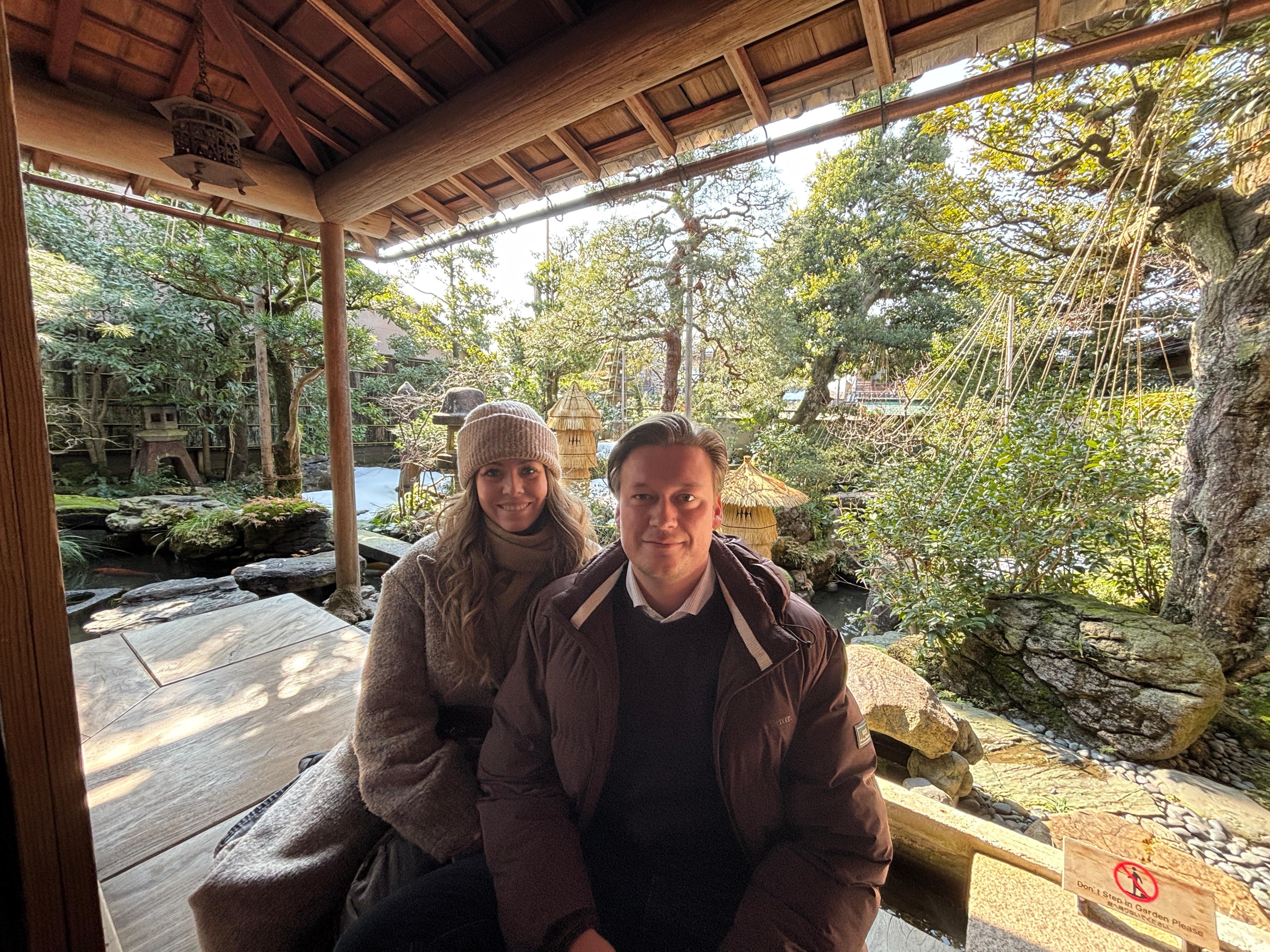
"Kanazawa's samurai quarters survived largely intact, their earthen walls and wooden gates preserved through a combination of geographic luck and municipal resolve."
Your experience

What a tour day looks like

A step-by-step walkthrough of the visit — what you'll see, how long each stage takes, and the details that matter.

You meet your guide at the Ishikawa Gate, a two-story timber structure whose white lead-tile roof gleams against the morning sky. The group assembles beneath the gate's shadow, and the guide distributes radio receivers so everyone can hear commentary over street noise. You enter the castle grounds through the stone-walled passage that once funneled samurai retainers toward the inner baileys. The path curves left, hiding the interior courtyard from view—a defensive design intended to slow invaders and confuse attackers unfamiliar with the layout. Ten minutes into the walk you reach the reconstructed Hishi Yagura turret, its whitewashed walls and black-tile accents mirroring the aesthetic of the original structure destroyed by fire in 1881. The guide explains the diamond-shaped floor plan that gives the turret its name. You cross the gravel expanse of the Kahoku Gate plaza and descend into Nagamachi, where the streets narrow and the walls rise. The ochre plaster, mixed with crushed oyster shell, takes on a warm glow even under cloud cover. You stop at the Nomura Samurai House, remove your shoes at the entrance, and step onto polished cypress floorboards. The interior garden appears through a floor-to-ceiling window: a miniature waterfall fed by a hidden pump, carp circling a stone-lined pond, and a lantern carved from Mikage granite. The guide points out the sword rack in the alcove, the lacquered helmet stand, and the clan crest inlaid in gold leaf above the hearth. You exit into the lane and continue west, passing private residences still inhabited by descendants of samurai families, their gates marked with wooden plaques bearing family names in archaic script.

Frequently asked

Frequently asked questions about kanazawa samurai walking tour tours

What are the opening hours for a kanazawa samurai walking tour?

Kanazawa Castle Park is open daily from 07:00–18:00.

Is there an entrance fee for this kanazawa samurai walking tour?

Entry to the park grounds is 0 JPY, though specific buildings charge an entrance fee.

When is the best time to arrive for a kanazawa samurai walking tour?

The best arrival window is 09:00–11:00 to avoid mid-day crowds and enjoy cooler temperatures.

Are there prohibited items on a kanazawa samurai walking tour?

Prohibited items include bicycles, drones, and sports equipment that could endanger other visitors.

Is the site accessible for a kanazawa samurai walking tour?

The main paths are accessible, with wheelchairs available for loan at the Ishikawa-mon Gate information center.

Can I take photos during a kanazawa samurai walking tour?

Photography is generally permitted, though flash is prohibited inside the historical interior structures.

Are children allowed on a kanazawa samurai walking tour?

Yes, families are welcome, but note that the interior staircases at Kanazawa Castle are steep.

Where is the Kanazawa Castle meeting point?

The most popular meeting point for a kanazawa samurai walking tour is the Ishikawa-mon Gate.

Can I bring food on a kanazawa samurai walking tour?

Food is not allowed inside the historical buildings, but there are designated areas in the park for dining.